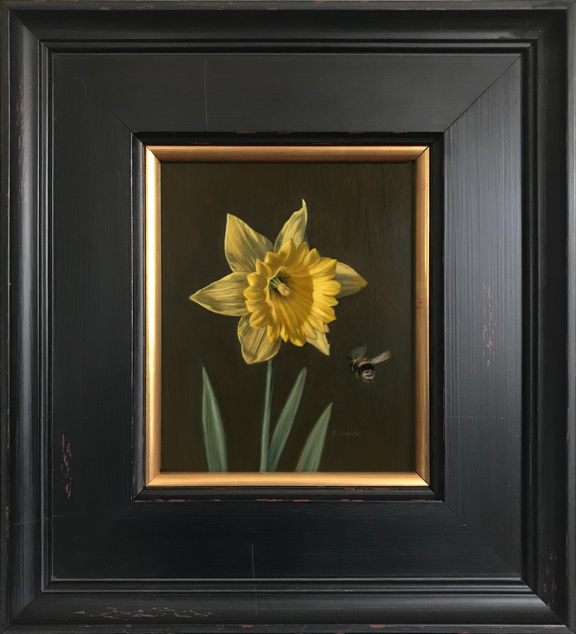
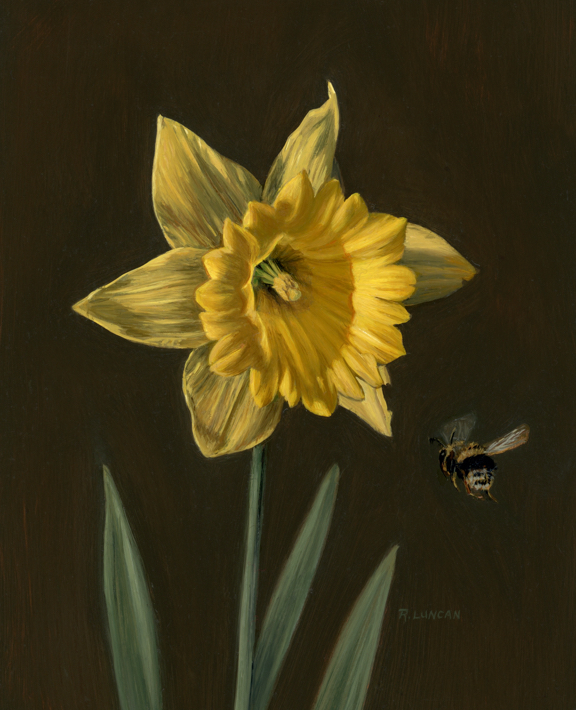
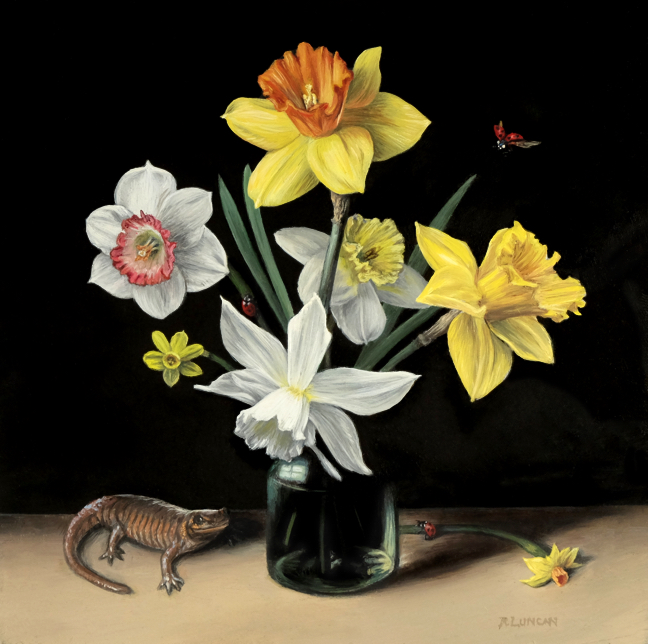
My newest miniature is a botanical daffocil painting. Daffodils are my favorite herald of the arrival of Spring.
It’s interesting how each painting I make inspires the next work. This miniature originally had five companions to acknowledge my March baby’s sixth birthday. I was so sure that this would work! But much like my six year old, it was wild and chaotic, and it didn’t say “simplify” like I’m going for with this series. Instead of rejecting the idea completely, I ran with the wildness in an even more complicated composition. But that is a work for another day, and it will be a far cry from “miniature” or “simplified”.
With that mockup resolved, I took my favorite bloom from the bunch back to the drawing board. I embraced the spirit of springtime and growing days of sunshine. The bee heads toward the glowing flower like we are headed into a beautiful and glorious summer! I can vividly picture him landing and wiggling into the warm and welcoming bloom.
This painting is for me a lesson that constantly needs to be relearned. Things don’t always work out how you think they will, but by staying flexible and letting some ideas go, things can turn out even better than expected. It’s almost the end of daffodil season, but I hope you are able to take some time to enjoy the world in bloom around you.
In 2018, the Portrait Society of America added a new category to its annual Members Only competition: “Animals as Subject”. Since then I’ve entered every year and have been incredibly fortunate to have my work selected either as one of the winners, or as a finalist (top twenty).
My painting of Harrison was selected as a finalists in this years competition. Thanks so much to the Jurors for selecting my work and thank you to the Portrait Society of America for their dedication to furthering the traditions of fine art portraiture. Congratulations to all of the winners and finalists in the competition!
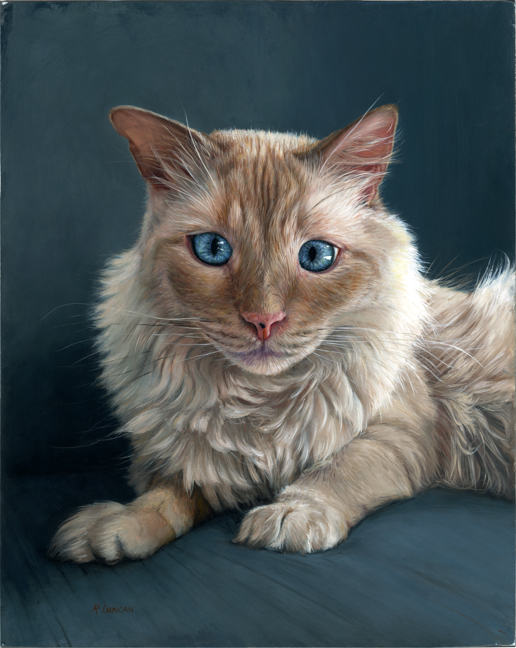
I’m in love with the subject for my latest pet portrait commission. Harrison is a flame point rag doll Siamese and those eyes!! Harrison is 10″ x 8″ and is made with oil on aluminum.
During my tiny thanksgiving gathering we talked about things we were grateful for. My clients that commission me to paint their beautiful furry friends came just after friends and family. Thank you. ❤️
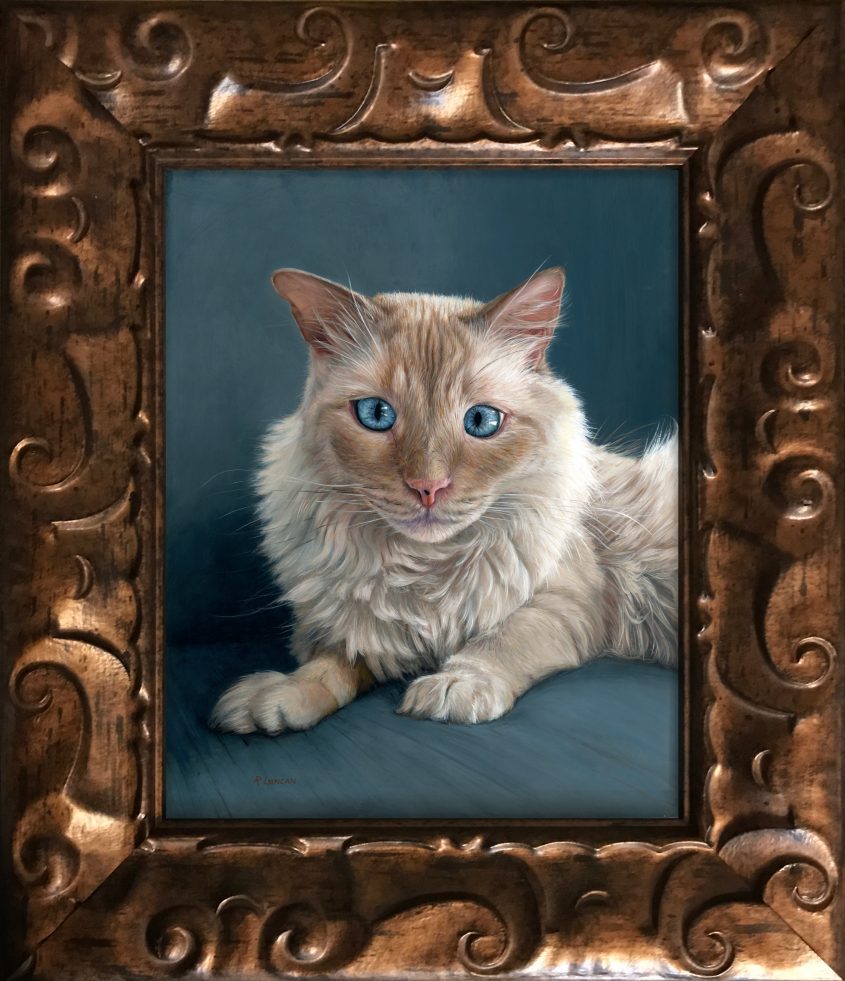
I worked as a picture framer during my college years and have continued to frame my own work since then. I frame most of my clients commissioned works and for Harrisons portrait we choose this georgeous bronze colored carved frame. My client has synesthesia and she loved this frame in particular because the swirls looked like how Harrison’s meows sound. Sounds like a pretty incredible experience with the world.
From Melissa:
Ahhhh!!! It’s BEAUTIFUL! I feel like you totally and perfectly captured his essence. It’s wonderful! I love how the background brings out his eyes and various fur colors and textures. His little nose is so cute!! And he looks so fluffy!
Thank you so much!!!
Traditional Techniques: Layer by Layer
I made a short video that shows how my paintings evolve, using the time tested technique of “lean to fat”. The first layer starts with big shapes and paint thinned with odorless mineral spirits (Gamsol). This is the lean layer. For the oil, I use Galkyd slow dry painting medium. As the detail increases with each layer, so does the oil content added to my paint mixture. By working in this way, the paint has ideal conditions to adhere to its substrate. It also ensures that the bottom layers of paint will dry more quickly than the top layers which prevents cracking in the future. I also find that this technique gives painting a luminocity and depth that is essential for capturing fluffy fur and pearlecent eyes.
If you’re interested in a pet portrait of your own, please visit my commission page to lean more.
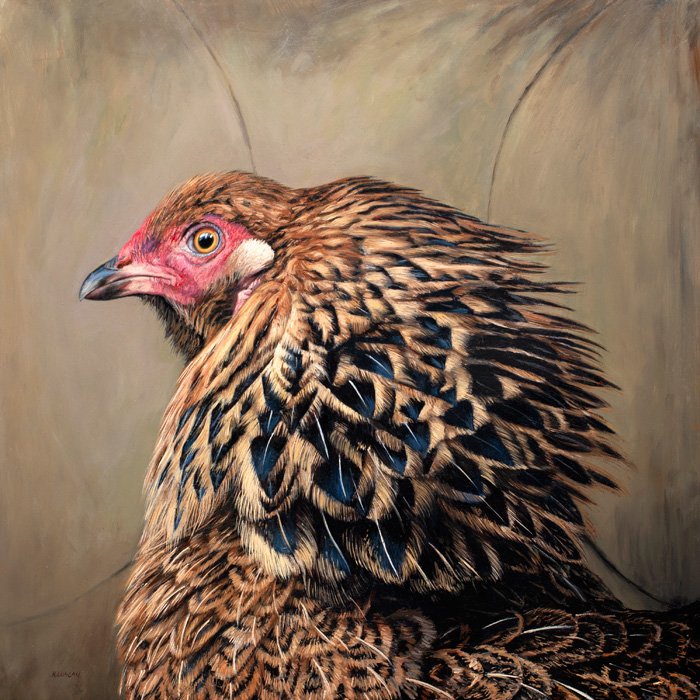
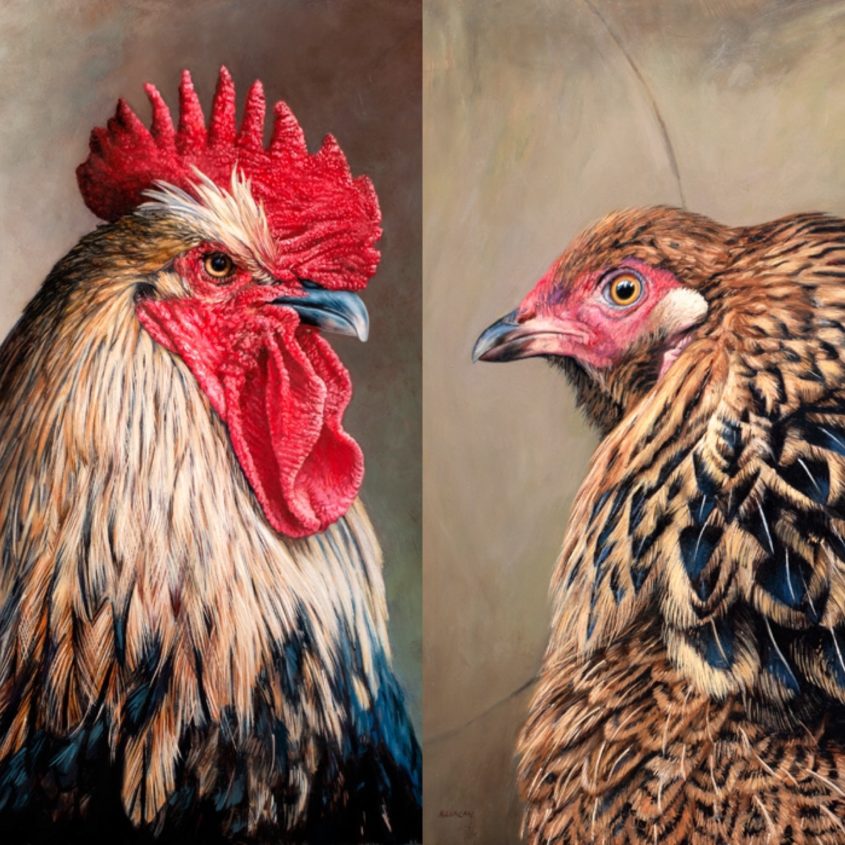
A few months ago I reached out to my Instagram and Facebook community to help me choose which chicken painting to enter in the annual Portrait Society of America’s member’s only competition. I was having trouble picking and thought there would be a clear favorite. After almost a hundred votes though, it was almost exactly a tie! Even so, it still helped me choose. People were very passionate on either side, but people typically liked the hen because the painting was more unique. For right or wrong, I liked that rational and went with it. I’m happy to share that she was a finalist in the animals category. Perhaps the rooster would have done even better in the competition, but you never know!
The rooster or the hen?
Both of these paintings have backgrounds that reference Rembrandt self-portrait’s. I’ve always been a huge fan of his work and wanted to portray the chickens in a formal Dutch Portrait style. I helped install an exhibit at the Seattle Art Museum of artwork from the Kenwood House Collection from London several years ago. One of my favorite pieces in the exhibit was his Self-Portrait with Two Circles. This was the painting that inspired the background of my hen. She’s one of four girls that lives in Seattle in my friend Paige’s backyard. As the henpecked bird, she was making a grand show of bring larger and fluffing out. I was very fortunate to actually get a shot of the demonstration during my photo shoot for reference images.
You can find her on display along with the rooster at Winfield Gallery. Go to my Available Works page to see all my paintings currently available in galleries and from the studio.
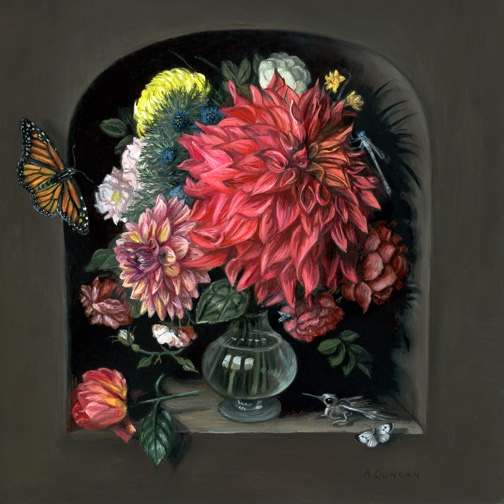
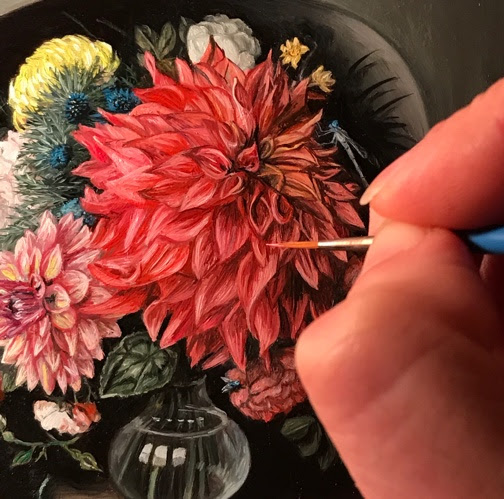
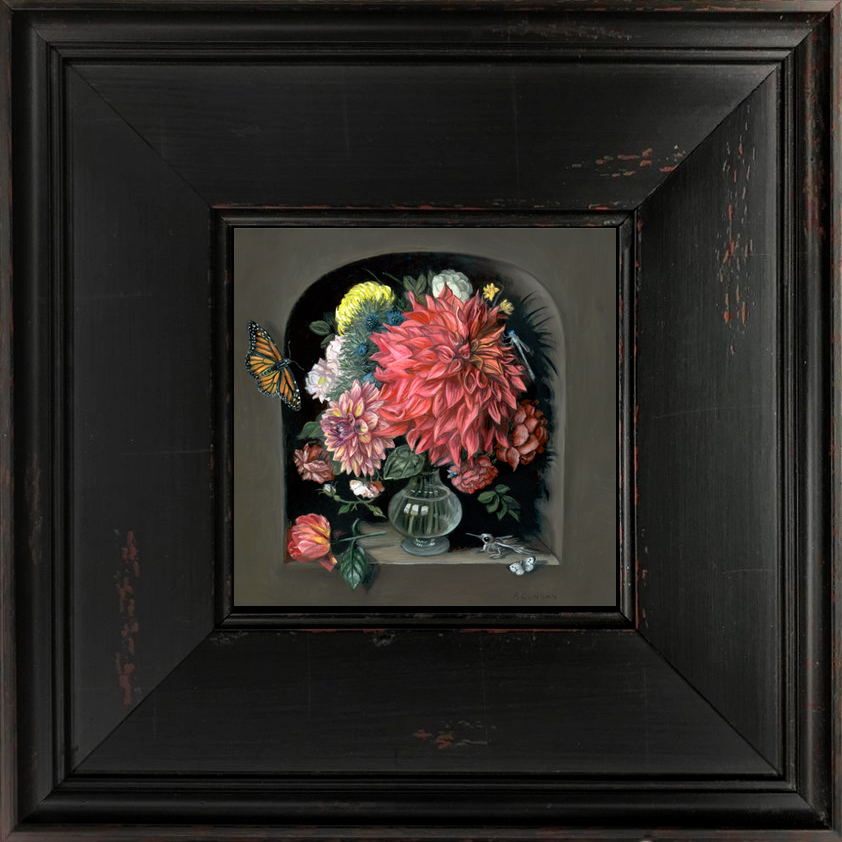
As the flowers and trees fade and die back, fall is the perfect time for a miniature vanitas painting. Vanitas paintings were created long before and after they became a common genre in Netherlandish art of the 16th and 17th centuries. They are symbolic and are meant to remind us of the inevitability of death or change.
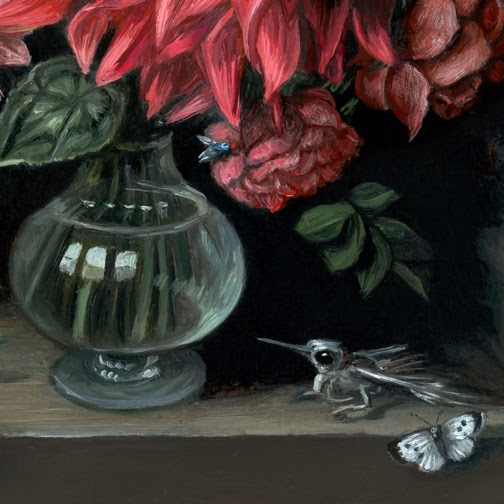
My grand show of color and life punctuates the shift toward winter, one last “Hurrah!” from the warmer seasons. The hint of the coming winter is found in the tiny, almost hidden hummingbird skeleton. But if you dig into the meaning of the items in the painting, you’ll find that both the cut flowers and skeleton symbolize the same things – death or transience. The cut flowers are preserved my painting in full bloom glory, but they began to fade even before I’d finished the paintings. But don’t worry, the butterflies are a symbol of regeneration, resurrection and the cycle of life. Everything’s going to be fine.
Hope you enjoy my newest miniature vanitas and I hope you’re keeping warm and healthy. Thanks to the flowers of my garden, to the dahlia garden at Volunteer Park, and to my sister-in-law for the hummingbird skeleton and the biggest dahlia I’ve ever seen. And a big thank you to you for your continued support.
Go to my Monthly Miniatures page to see the whole series! Sign up to my monthly newsletter for upstate and for the chance to purchase paintings before they’re public.
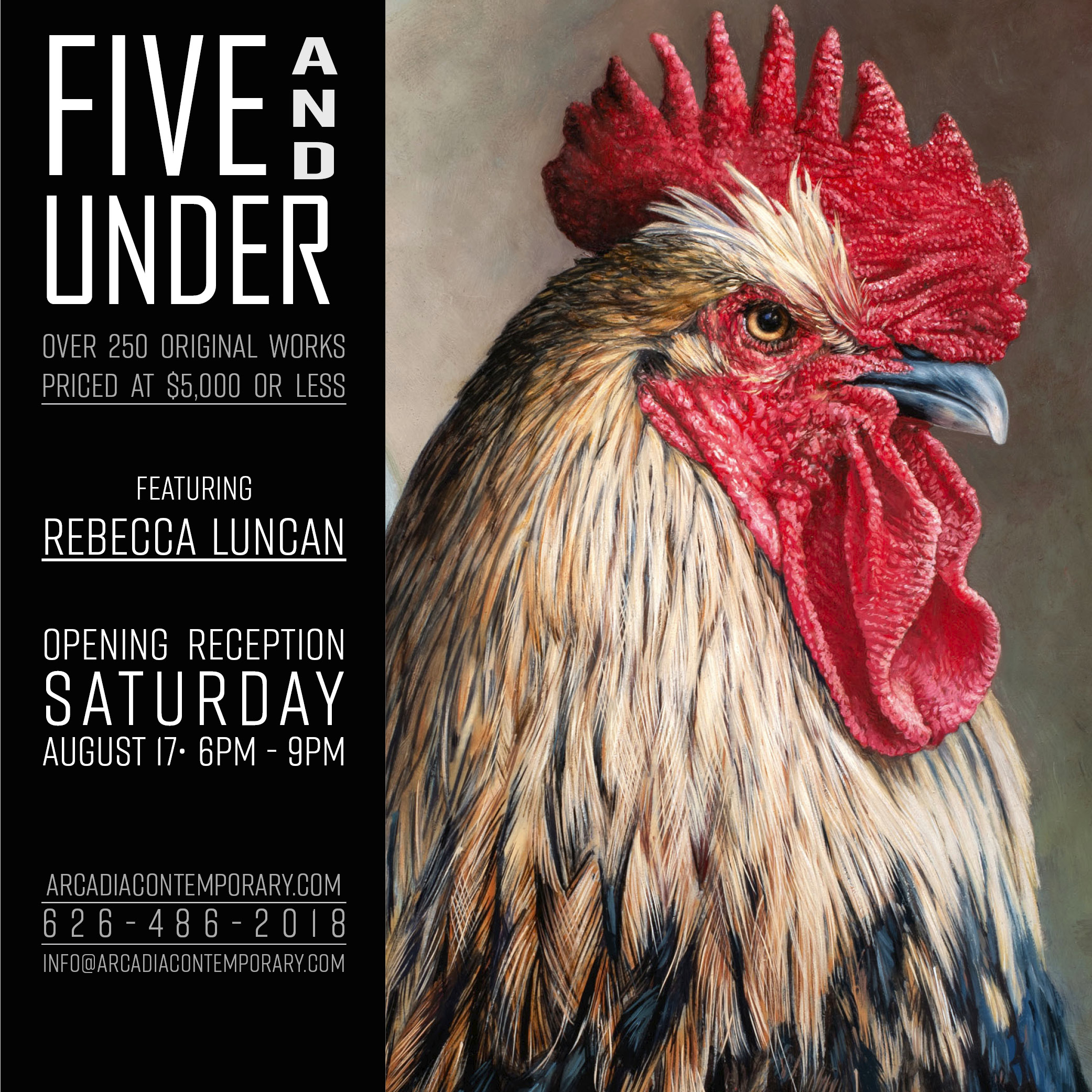
Excited to announce that I will have four new paintings available in Arcadia Contemporary’s annual “Five and Under” exhibition opening this Saturday! Please go to Arcadia Contemporary’s website for more information and email info@arcadiacontemporary.com to inquire about available works!
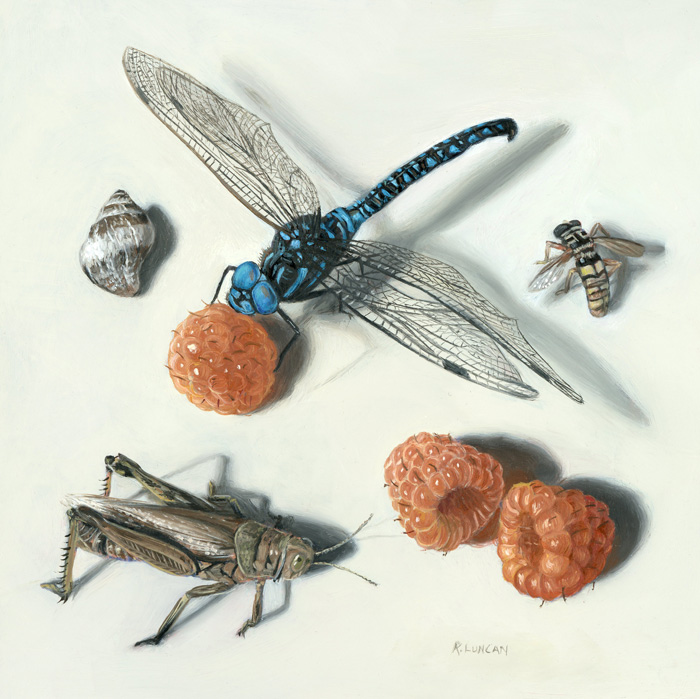
In art school I was known as the “bug girl” because almost all of my painting had insects in them. Insects were a huge inspiration, and though they are no longer the primary focus on my work, they have continued to appear in my paintings throughout the years. I find that the closer that I look at the insect I’m painting, the more I feel a sense of empathy for it. I imagine a personality in there, and wonder about the history of it’s life.
My insect collection has been with me since my art school days. Some of my insects were gifts from Cincinnati Zoo entomologists, while others I sought out myself. I learned to pin insects from a friend I met at the frame shop where I used to work.
Anita’s Insects
The insect specimens in this painting are from a very special part of my collection. These creatures came from three prized boxes put together by photographer Anita Douthat when she was a girl in Northern Kentucky. I knew Anita through her husband Cal Kowal, who was my photography teacher at the Art Academy of Cincinnati.
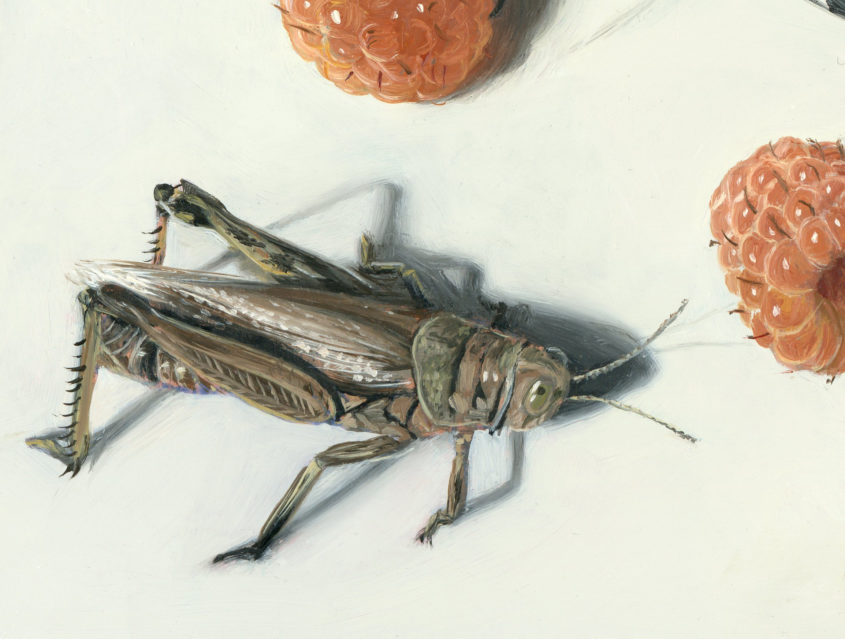
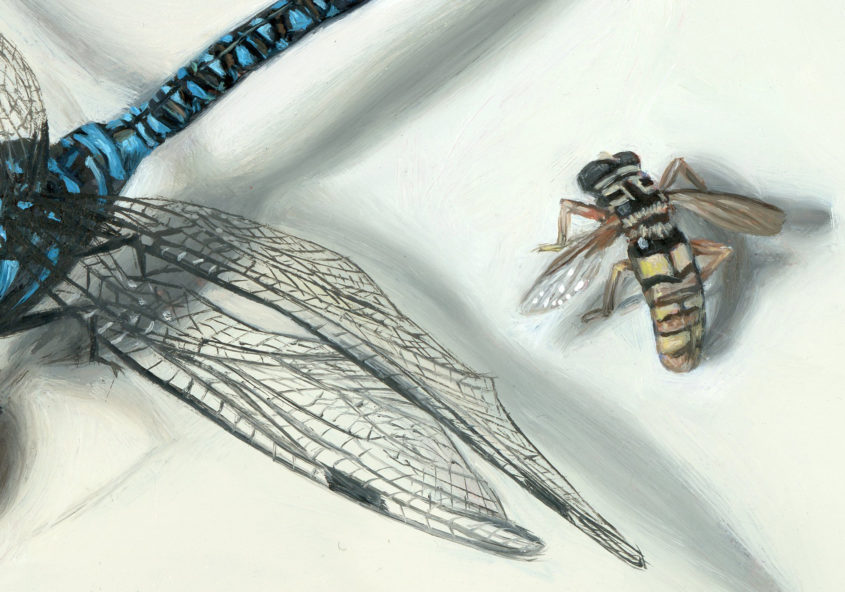
Still life paintings can tell a secret story through the symbolism of their elements. These pale raspberries grow in my garden and are symbols of kindness. The shell came from my husband’s pocket (he’s always collecting shells and rocks on his adventures) and are a symbol of birth and fortune. Insects are all around us, yet their forms, life cycles, and social structures couldn’t be more different than our own. Dragonflies symbolize change, and grasshoppers luck. Bees have had close ties with humanity and throughout the ages have variously stood for power, love, and industry. All of these types of insects can be found in the Northern Kentucky region where my models were originally collected over forty years ago (I exaggerated the blue in the dragonfly which was quite faded).
This painting is 5″ x 5″, oil on copper. Go to the Monthly Miniature page to see more of the paintings from the series, In Season.
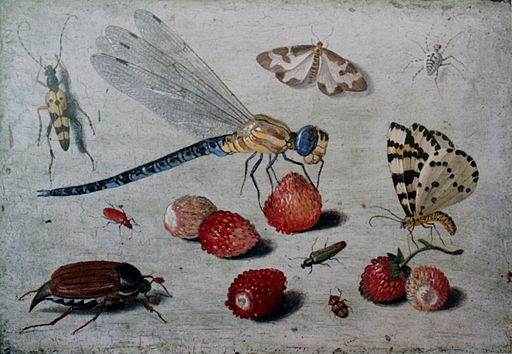
Jan van Kessel the Elder, Flemish still life master that inspired this months painting
A Dragon-fly, Two Moths, a Spider and Some Beetles, With Wild Strawberries, Oil on copper; 9 x 13 cm
Jan van Kessel the Elder had big shoes to fit into. He was the great-grandson of Pieter Bruegel, who is cited as the most significant artist of Dutch and Flemish Renaissance painting. His grandfather Jan Brueghel the Elder, was a close friend and collaborator with Peter Paul Rubens and the two artists were the leading Flemish painters in the first three decades of the 17th century. Not to mention his uncles and great uncles… Let’s just say, he came from a family that made a big and lasting impact on the art scene.
Starting his training at the age of nine, he was particularly influenced by the work of his grandfather and was quite versatile. He worked in many genres including studies of insects, floral still lifes, marines, river landscapes, paradise landscapes, allegorical compositions, scenes with animals and genre scenes.
I was drawn to his insect still life paintings by his playful compositions that fill every section of the page, while carefully balancing color and shape in a seemingly effortless manner. The results of his carefully painted tiny subjects do not come across as cold scientific illustrations, but instead are warm and lively portraits. And if that weren’t enough, he also painted these miniature still lifes on copper (my hero!).
My Self portrait painting has been selected as a finalist for the ARC Salon 2019 Competition!
I was fortunate to have my painting, “Admiral Vox” travel for last years exhibition and I couldn’t have been happier with how the Art Renewal Center (ARC) handled everything. It was such an incredible experience to have my artwork hanging alongside so many extraordinary pieces. I traveled to Barcelona to see the final installation of the exhibit at the MEAM which is a beautiful space. It’s inspiring to see so many contemporary artists pick up the tradition and make interesting work that’s relevant today. I couldn’t be happier to have another painting selected as a finalist.
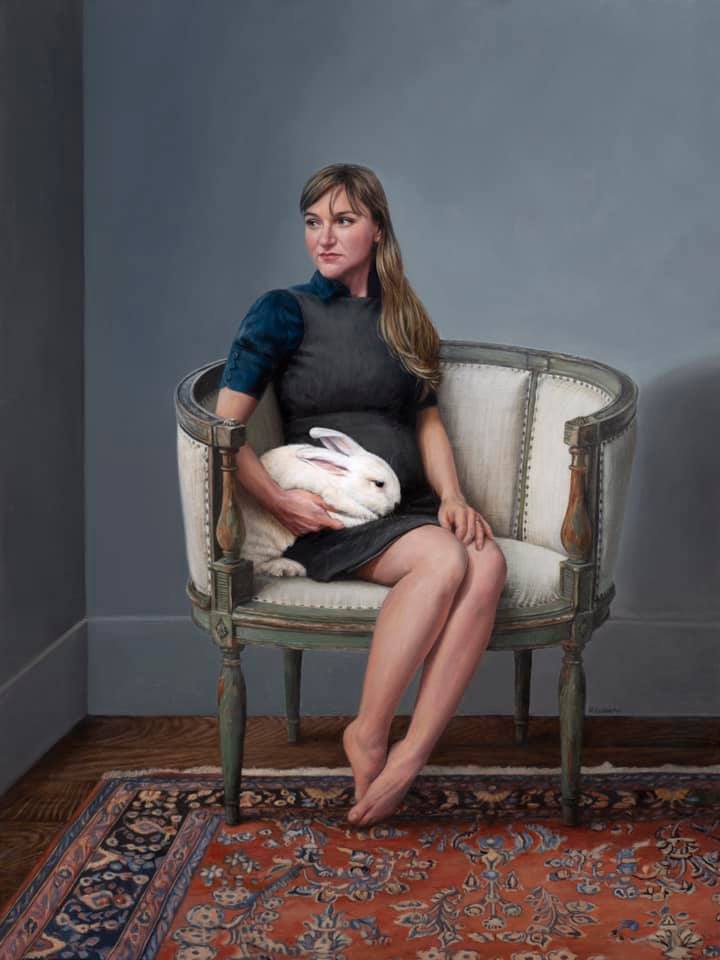
Learn more about “Self Portrait – Expecting” in my previous blog post.
This year they received over 4,300 entries from 73 countries. The number of entries grew by more than 1,000 from last year! Winners will be posted July 1– please wish me luck!
“Leading the revival of realism in the visual arts, the Art Renewal Center (ARC), a 501(c)(3), non-profit, educational foundation, hosts the largest online museum dedicated to representational art and includes works by the old masters, 19th century, and 21st Century Artists as well as articles, letters and other online resources. The ARC is the foremost and only vetting service for representational art schools ensuring that the teaching curricula and quality of teacher and student work meet our strict standards to become ARC Approved™. The ARC Salon Competition, which is the largest and most prestigious competition in the world for realist artists painting, sculpting and drawing today with eleven categories and thousands of works competing, culminating in a traveling live exhibition of many of the winning works. The ARC works with other ARC Allied Organizations™, artist groups, museums, and publications to become a central news hub for the 21st Century Representational Art Movement. Read the ARC Philosophy written by ARC Chairman, Frederick C. Ross, to learn why ARC is so passionately dedicated to representational art.
When I was starting my Monthly Miniature still life paintings last January, I got a serendipitous invitation from curator Jeremy Buben. He operates The FoodArt Collection and was putting together a show of still life’s and tuliperies inspired by still life’s of the Dutch tradition and tuliperies made in the 1600’s. I happily accepted the invitation to be one of the artists.
The show hosts a great mix of styles and mediums, each artist creating lush, elegant pieces. And you don’t often get to see tulipieres! A tuliperie or tulip-holder is an ornate vessel made specifically to display tulips. They were common during the 17th c and were often designed to grow the bulbs right in the vase. I hope you’ll get the chance to stop by the gallery to see all of the pieces in person. If you can’t make it, you can go to the gallery website and see all of the pieces from the exhibit online.
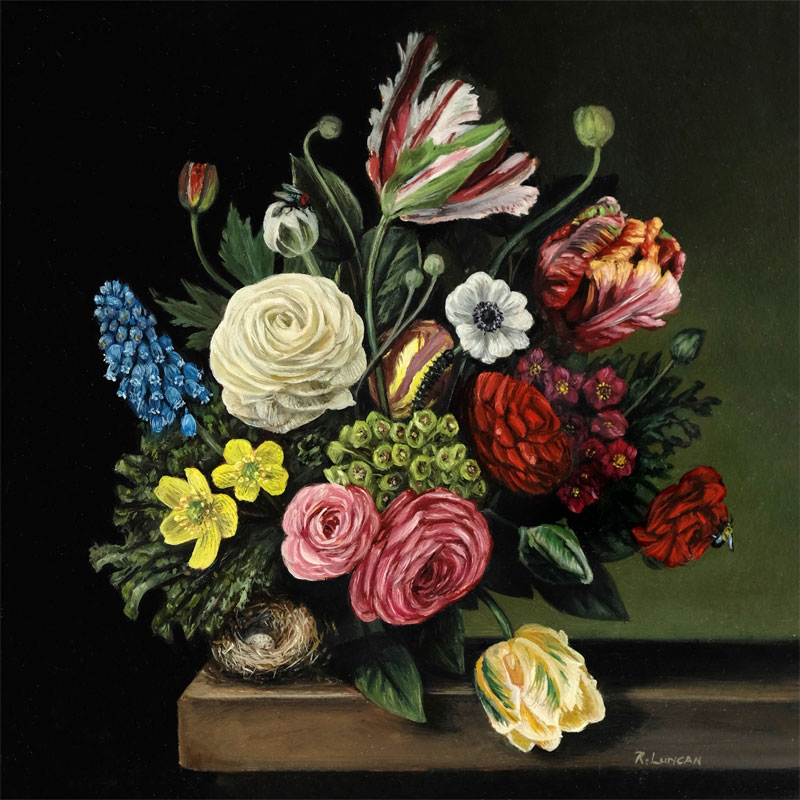
Flowers, Bird’s Nest and Insects, oil on copper 5″ x 5″
Opening Reception: Sunday April 28, 2-5pm
Shows up through the month of May, with Sunday hours and by appointment.
From the gallery:
“The FoodArt Collection is thrilled to present a group art show of tulipieres (tulip vases) and Dutch Golden Age inspired still lifes from seven local artists.
A brief explanation: upon returning from a holiday in Holland I became obsessed with the tulipiere, a strange and fantastical vase designed specifically for tulips. To my delight I learned that local ceramic artist Carol Gouthro shared the same interest and had even curated a tulipiere show just a few years earlier at the Museum of Northwest Art (MoNA) in La Conner. When the chance to put together this show came about I reached back out to Carol and asked her if she’d like to make her first tulipiere and show it alongside art inspired by the Dutch Golden Age. A few more invites went out and thus Going Dutch was created.
I’m excited to share my passion for tulipieres, a very useful vase in my opinion, and gorgeous classical inspired art from some extremely talented local artists! Please join us for the opening this Sunday and see these tulipieres for yourself. There will also be a healthy amount of Samish Bay cheese to eat.”
The inspiration for my March Monthly Miniature is artist, Ambrosius Bosschaert the Elder (18 January 1573 – 1621) who was a still life painter of the Dutch Golden Age. He was among the founders of the tradition, the height of which dates to around 1600-1800. I’ve long admired paintings from this era and this series is giving me the opportunity to luxuriate the detailed little worlds created by so many different artists. Each of my twelve paintings will pay tribute to a different artist form this era and Ambrosius Bosschaert is definately one of my favorites. I’m drawn to his symmetrical and simple compositions and tried to compose my daffodil painting with some of the grace and elegance he so carefully crafts into each small painting. Go to my Monthly Miniatures gallery to see all of the paintings in this series. Learn more about this painting in my previous post.
Oil on Copper
Ambrosius Bosschaert is also a fellow painter on copper. If you look at the image below, you’ll notice that this three hundred year old painting is free of cracks or paint loss. Aside form the luminous and smooth surface, meal is an ideal painting surface because it is such a stable surface. It doesn’t tear or suffer from expanding or contracting with humidity like canvas or wood.
Ambrosius Bosschaert (1573–1621), Still Life with Bouquet of Tulips, a Rose, Clover, and Cyclamen in a Green Glass Bottle, oil on copper