
A Milestone Gift
Last fall, I had the joy of completing one of my most meaningful commissions to date: a portrait of a dear friend of the family, Lisa with her two horses, Shilo and Bruno. The painting was commissioned by her husband, Leo, as a surprise for Lisa’s 60th birthday.
Lisa and Leo have a special place in my artistic journey. Lisa was my very first pet portrait client back in 2015, when I painted her horse Shilo and then her three dogs. Since then, they have been some of my most devoted collectors, with around a dozen still lifes and animal paintings in ther home. More than that, they are some of the warmest, most charming people I know. I’d often dreamed of painting Lisa’s portrait someday, and when Leo reached out, I was thrilled.
The Challenge of the Mock-Up
Because the portrait was a surprise, we worked from existing images. Most were casual snapshots and none were close to the painting Leo and I were envisioning. Some photos had a great expression of Lisa, a strong image of her riding the wrong horse, or great shots of the horses with no one riding, but nothing lined up just right. I spent weeks trying every possible combination, piecing together multiple “Frankenstein” mock-ups using Lisa, Shilo, Bruno, and even a saddle reference found online. Mock-ups are such a critical part of the commission process, but nothing felt quite right, and I began to panic.
Then, just a few months before the deadline, Leo sent a new batch of photos. Among them were perfect images of Lisa riding Bruno in the autumn forest, and perfect images of Shilo, her now retired horse, grazing. The fall color was meaningful as the family had recently bought a house in New Hampshire, and the seasonal change there is spectacular. At last, everything clicked. The mock-up came together in no time, and I could dive into painting.

A Gift to Treasure
When the portrait was finished, Leo and Lisa were out of town, but I wanted them to have it as soon as they got back. I shipped it to my parents, who live just a few houses away, and they hand-delivered it when Leo and Lisa returned. Both of them burst into tears when they unwrapped it, and my mom later told me how much it moved her to witness the moment. Hearing my mother say how proud she was of my work brought me to tears as well.
From Lisa:
“It’s here!!!! Do you realize the JOY your talent brings people? It’s an incredible painting—so beautiful and you hit every detail. I LOVE it and I LOVE you!”
Moments like these remind me why I make this work and I’m so grateful for every moment in the studio. Portraits are a celebration of love, memory, and connection. Happy birthday Lisa! ❤️


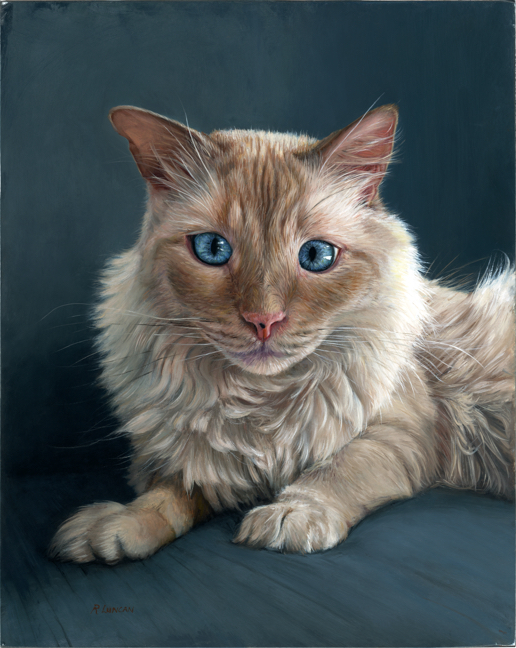
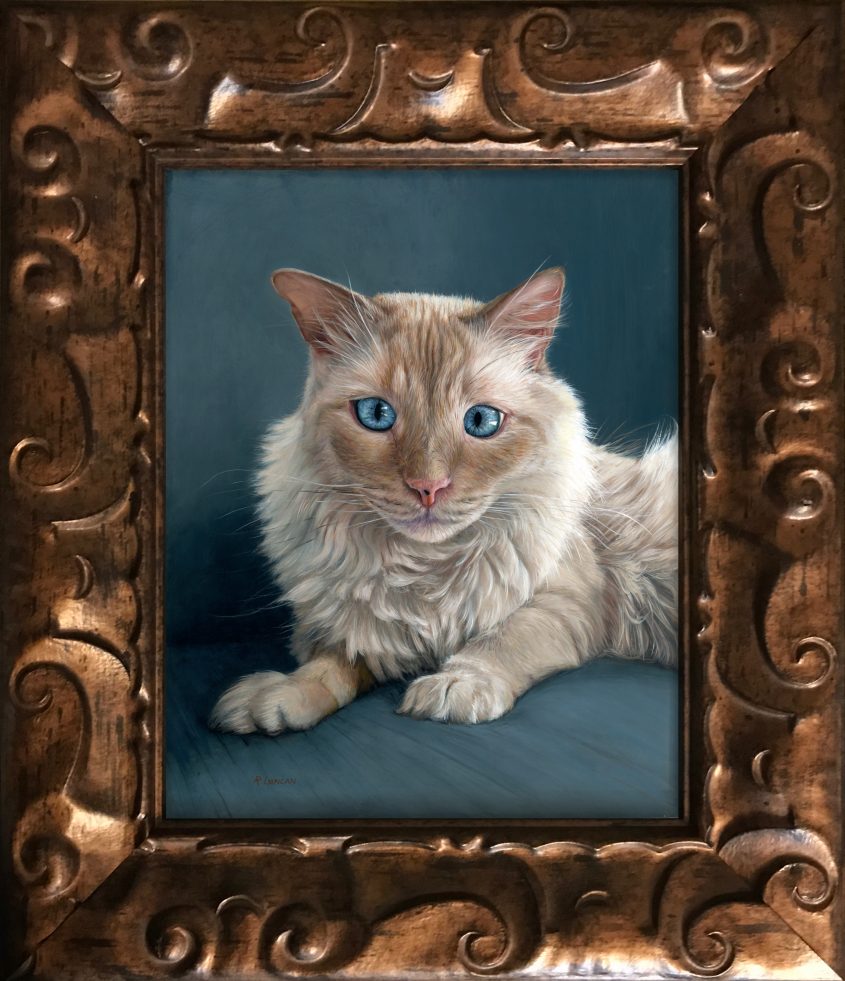
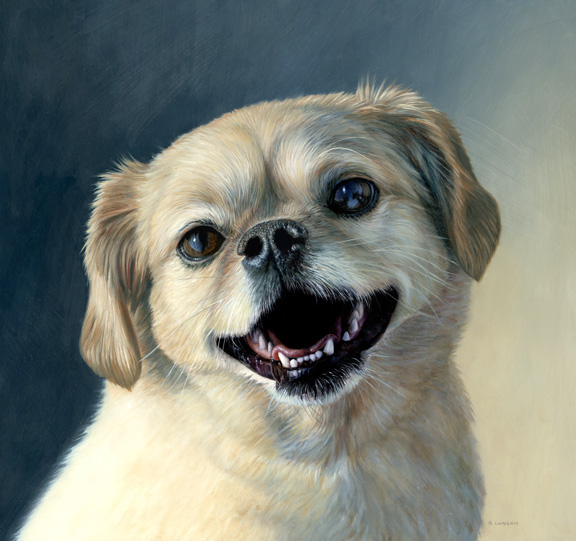


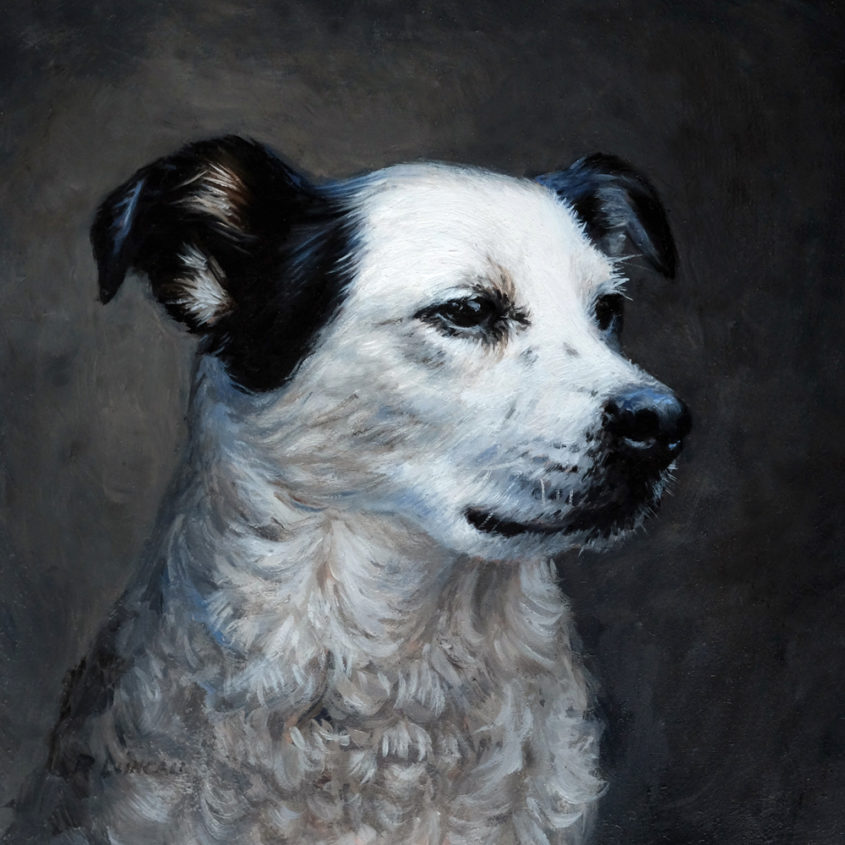


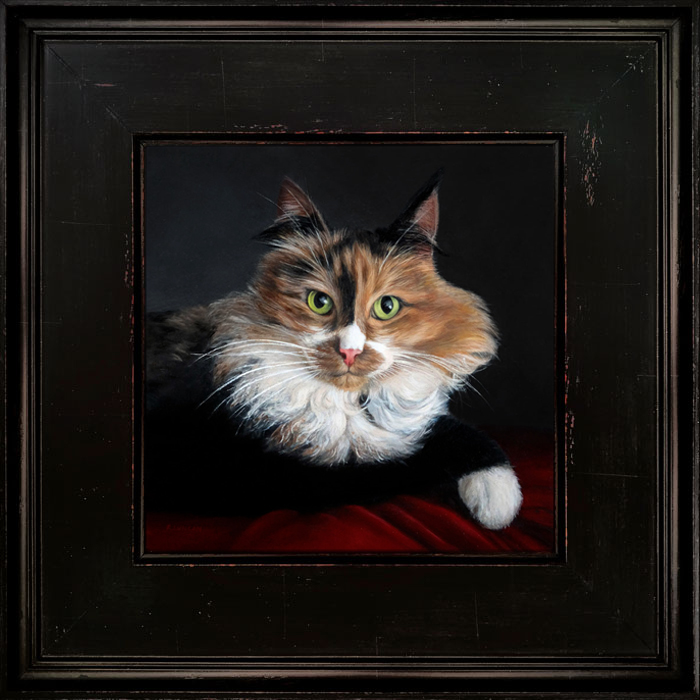
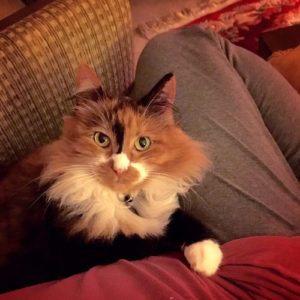
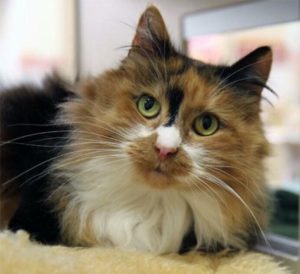 Photographing your cat from a their eye level tends to make the image feel more intimate and it shows your cat without distortion. Cat’s do like to climb so you don’t always have to get down on the ground to achieve this.
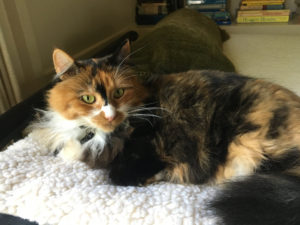 Natural light is ideal and its best if the day is slightly overcast. Cats are usually indoor creatures, but steering them towards a window will achieve the desired effect. Not only does natural overcast light help avoid harsh shadows, it gives me a more accurate representation of color for the fur and eyes. Try to pose them so that they get the light to twinkle in their eyes for a lifelike appearance.
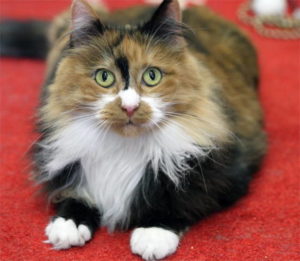 Hi resolution images are a must but if most of the picture is just background, I’m not going to get any detail (unless the landscape will be a part of the painting!). Never compress images before sending them and fill the frame with your cat as much as possible for the most detail. Getting the correct texture of your cats fur and the subtle color changes in the eyes is impossible if the image is blurry. Filling the frame with your cat gives me all of the details that are so fun to paint and to look at. Use the zoom feature on your camera to help you get close without attracting too much attention.
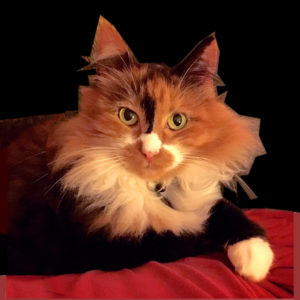 My mock-up’s are constructed digitally and they help give a sense of what the painting will look like. This mock-up was submitted with the note that the color and fine details would be taken form another image (the one used to demonstrate “natural light” above).


